
The future of construction looks to the "passive house"
But what is a "Passive House"This is a type of housing capable of maintaining ideal atmospheric conditions to significantly reduce energy consumption. The Passivhaus, or passive house, is a construction standard that originated in Germany in 1991 and has spread throughout the world, combining high interior comfort with very low energy consumption and an affordable price, thanks to meticulous attention to the building envelope and a controlled ventilation system. Unlike the more "classic" low-energy buildings, Passivhaus or passive houses offer medium- and long-term cost savings, since the airtight roof insulation prevents heat loss and maximizes the use of solar energy.".
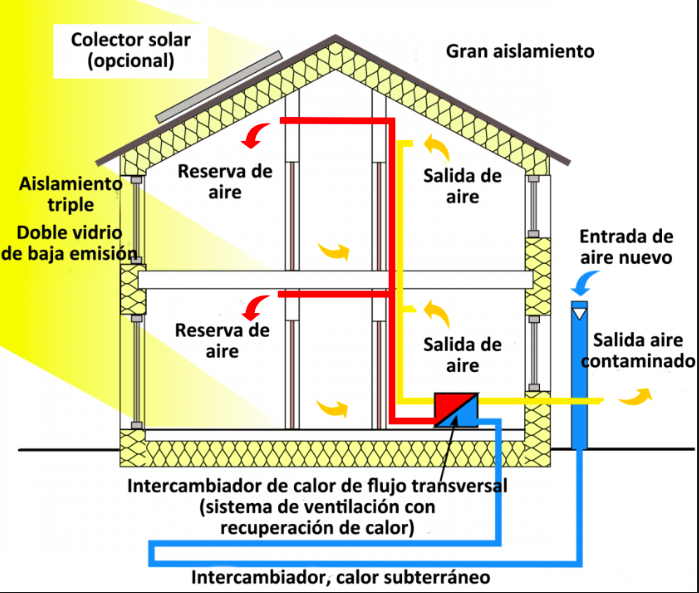
Thus, while a typical home spends around €1,500 a year on heating, this construction model would only require €150. The current construction model anticipates significant advancements, aimed at self-sufficiency and energy savings of around 70 to 90%. All of this suggests its essential application in large buildings and offices that involve substantial energy consumption.
Ignoring these economic and energy benefits, we must not forget the health benefits, since the reduction of the environmental impact of this construction model is achieved through intelligent air renewal, the incidence of sunlight and the use of natural and less polluting materials than conventional ones, which help to prevent and reduce diseases and infections of the respiratory tract such as fibromyalgia or asthma, among others.
To mark this new trend in construction, Seville celebrates on November 16, 17 and 18, the 9th Passivhaus Congress, Spain's leading event on high energy efficiency, nearly zero-energy buildings, and passive houses. The congress is organized by PASSIVE HOUSE BUILDING PLATFORM, a non-profit association that brings together professionals, companies and individuals with concerns and knowledge in the field of energy efficiency in building, comfort and construction quality.
Fountain Inmodiario