
THE HOLY FACE
(English version below)
THE HOLY FACE
The Baroque-style Monastery of the Holy Face is located five kilometers from the town center, in the hamlet of the same name. Inside, it houses a relic brought from the Vatican in the 15th century which, according to popular tradition, was the cloth with which Veronica wiped the bloodied face of Jesus on the way to Calvary.
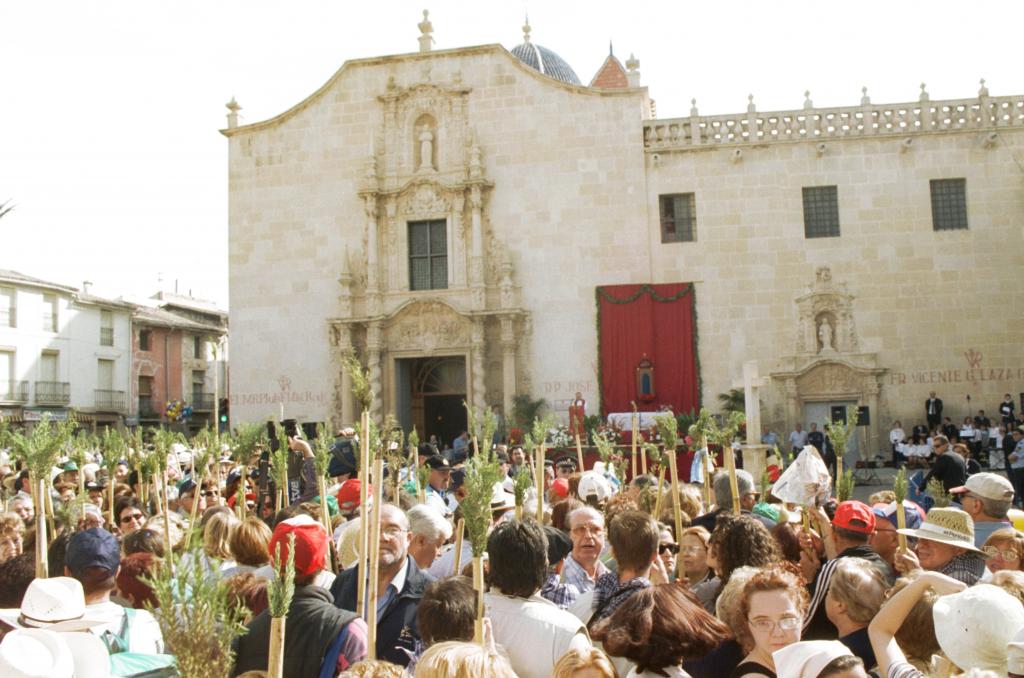
Every year, on the second Thursday after Easter Sunday, thousands of people from Alicante, many dressed in their traditional black smocks, checkered scarves tied around their necks, and carrying walking sticks adorned with sprigs of rosemary, walk for approximately two hours to participate in the Pilgrimage of the Holy Face, the second most important pilgrimage in Spain after El Rocío. Inside the church, behind the main altarpiece, is a small shrine where the relics of the Holy Face are kept.
Once they arrive at the Monastery, the pilgrims wait patiently for the opening of the shrine that houses the precious relic. Only the most fortunate—as it is difficult to find a place due to the large number of devotees—will be able to witness the ceremony, which is followed by the celebration of Mass. Around the Monastery, the thousands of attendees, mostly families, continue the festivities with food brought from home, games, visits to the artisan stalls, and the fair.
THE HOLY FACE
The monastery of La Santa Faz, in Baroque style, is located five kilometers from the town center, in the hamlet of the same name. It houses a relic brought from the Vatican in the 15th century which, according to popular tradition, was the cloth with which Veronica wiped the bloodied face of Jesus on his way to Calvary.
Every year, on the second Thursday after Easter Sunday, thousands of people from Alicante, many of them dressed in their typical black smock, with their checkered scarf knotted around their necks and helped by a cane with a sprig of rosemary at the end, walk for a couple of hours for the so-called Pilgrimage of the Pilgrimage of the Santa Faz, the second most important pilgrimage in Spain after the Rocío. Inside there is a chapel behind the main altarpiece where the relics of the Santa Faz are kept.
Once arrived at the Monastery, the pilgrims wait patiently for the opening of the chapel that holds such a precious relic and only the luckiest ones, as due to the large number of devotees it is not easy to get a place, they will be able to witness the act where the celebration of the mass takes place afterwards. Around the Monastery, thousands of people, mostly families, continue the festivities with food brought from home, games, visits to the craft stalls and the fair.