
Bonfires of Saint John, Alicante
Today we want to tell you about one of the most emblematic and spectacular festivities in Alicante: The Bonfires of San Juan, celebrated annually from June 20th to 24th in Alicante.
The Mascletà: An Explosion of Sound and Emotion
One of the most anticipated events during the Bonfires is the Mascletà, The mascletà, held daily at 2:00 PM in Plaza de los Luceros from June 20th to 24th, is a spectacular fireworks display. This impressive combination of noise, rhythm, and vibrations envelops spectators in a unique sensory experience. Each mascletà is designed by expert pyrotechnicians who compete to create the most impactful and rhythmic explosion.
The Story Behind the Bonfires
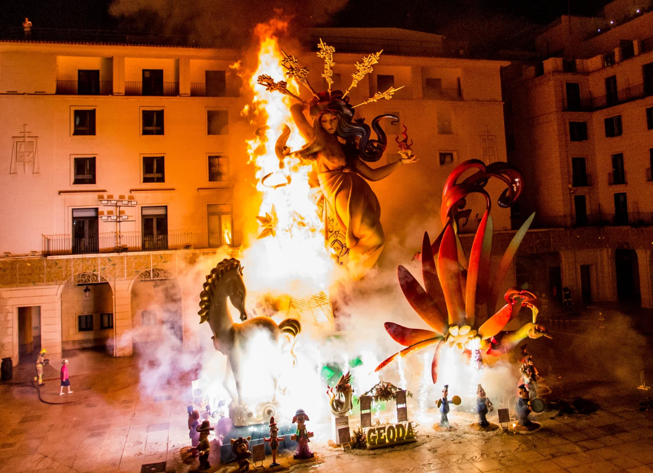
The Bonfires of Saint John have a rich history that blends local traditions with modern elements. Initially, the residents of Alicante used to burn old objects and furniture to symbolize a new beginning with the arrival of summer. Over time, these makeshift bonfires transformed into monumental sculptures made of cardboard, wood, and other flammable materials, known as bonfires or "ninots." These ninots depict satirical scenes and social critiques and are burned on the night of June 24th, known as the "Nit de la Cremà" (Night of the Burning).
Typical Gastronomy of the Bonfires
During the Bonfires of San Juan, food plays a fundamental role in the celebration. Among the typical dishes you can't miss are:
- Coca Amb Tonyina: A type of pastry filled with tuna, onion and pine nuts, very traditional at this time of year.
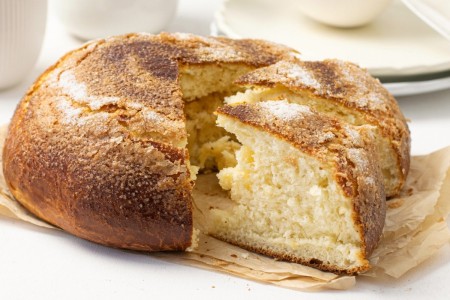
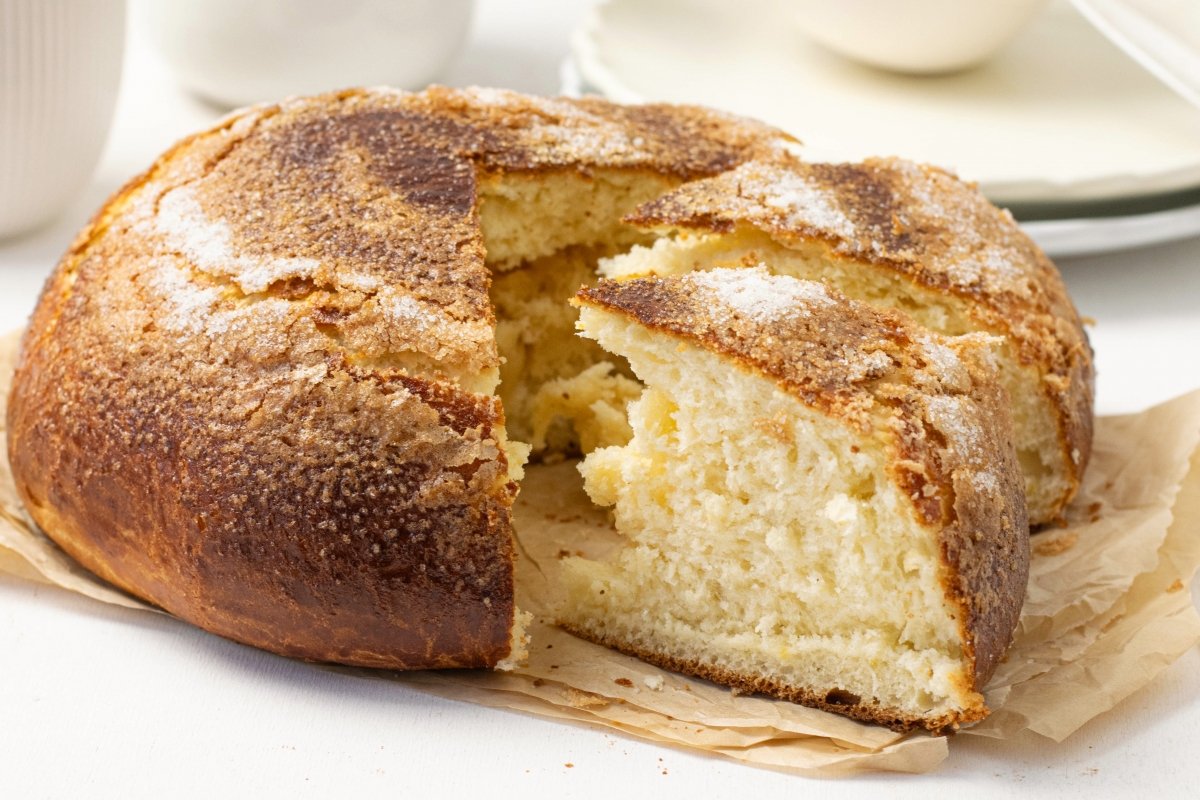
- Las Toñas: Typical sweet buns that are eaten especially during the holidays.
- Arroz a Banda: An exquisite rice dish cooked in fish broth, very popular in the region.
Traditional Dresses and Folkloric Parade
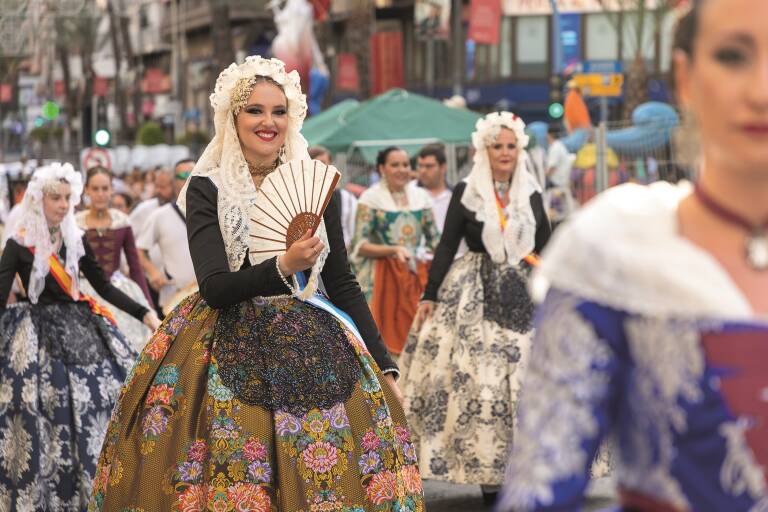
The Bonfires of Alicante are also a festival of color and tradition, where the people of Alicante wear their traditional costumes. Women wear the "Alicante dress," with long, colorful skirts, embroidered aprons, and mantillas, while men wear the "farmer's dress," consisting of vests, sashes, and scarves. One of the most moving moments of the festivities is the Offering of Flowers to the Virgin of Remedio, patron saint of Alicante, where participants parade in their traditional attire carrying bouquets of flowers.
The Festival and the Number of Tourists
The Bonfires of Saint John are a festival that attracts thousands of tourists every year. According to recent data, more than a million visitors come to Alicante during these days to enjoy the celebrations. The streets are filled with music, parades, competitions, and activities for all ages. The night of June 24th culminates with the impressive burning of the bonfires, a spectacle that illuminates the sky and marks the end of the festival. However, the festivities don't end there… because, for the week following the burning of the bonfires, there is a fireworks display every day at midnight on Postiguet Beach.
Conclusion
The Bonfires of Saint John are much more than a festival; they are a manifestation of Alicante's culture, tradition, and joy. From the impressive mascletà (firecracker display) to the burning of the bonfires, and including the delicious cuisine and colorful traditional costumes, this celebration offers an unforgettable experience for all who are lucky enough to witness it.
-----------------------------------------------------------------------------------
(ENGLISH VERSION)
Today we would like to tell you about one of the most emblematic and spectacular festivities in Alicante: Las Hogueras de San Juan, held annually from the 20th to the 24th of June in Alicante.
La Mascletà: Explosion of Sound and Excitement
One of the most anticipated events during the Bonfires is the Mascletà, which is held daily at 2:00 p.m. in the Plaza de los Luceros from the 20th to the 24th of June. This pyrotechnic spectacle is an impressive combination of noise, rhythm and vibrations that envelops spectators in a unique sensory experience. Each mascletà is designed by expert pyrotechnicians, who compete to create the most impressive and rhythmic explosion.
The History Behind the Bonfires
The Bonfires of San Juan have a rich history that combines local traditions and modern elements. Initially, the people of Alicante used to burn old objects and furniture to symbolize a new beginning with the arrival of summer. Over time, these improvised bonfires were transformed into monumental sculptures of cardboard, wood and other flammable materials, known as bonfires or ‘ninots’. These ninots represent satirical scenes and social criticism, and are burned on the night of 24 June, known as the ‘Nit de la Cremà’.
Typical Bonfire Gastronomy
During the Bonfires, food plays a fundamental role in the celebration. Typical dishes not to be missed include:
- Coca Amb Tonyina: A kind of pie filled with prickly pear, onion and pine nuts, very traditional at this time of the year.
- Las Toñas: Typical sweet buns that are eaten especially during the festive season.
- Arroz a Banda: An exquisite rice dish cooked in fish broth, very popular in the region.
Traditional Costumes and Folklore Parade
The Bonfires are also a festival of color and tradition, where the people of Alicante wear their traditional costumes. The women wear the ‘suit of Alicante’, with long, colorful skirts, embroidered aprons and mantillas, while the men wear the ‘suit of labrador’, made up of waistcoats, sashes and handkerchiefs. One of the most emotional moments of the fiestas is the Offering of Flowers to the Virgen del Remedio, patron saint of Alicante, where the participants stand in their traditional costumes carrying bouquets of flowers.
The Fiesta and the Number of Tourists
The Bonfires of San Juan are a festival that attracts thousands of tourists every year. According to recent figures, more than one million visitors come to Alicante during these days to enjoy the celebrations. The streets are filled with music, parades, competitions and activities for all ages. The night of the 24th of June culminates with the impressive burning of the bonfires, a spectacle that lights up the sky and marks the end of the festival. But the party doesn't end here... the week after the bonfire burning, every day at 00:00 there is a fireworks display on the Postiguet beach.
Conclusion
The Bonfires of San Juan are much more than a party; they are a manifestation of Alicante's culture, tradition and joy. From the impressive mascletà to the burning of the bonfires, from the delicious gastronomy to the colorful traditional costumes, this celebration offers an unforgettable experience for all who are lucky enough to experience it.